Ritualistic Burial Discovered Beneath Spanish Bronze Age Hearth
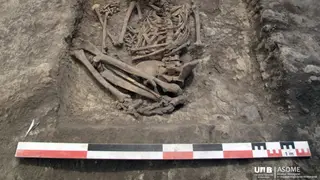
Researchers studying skeletal remains at La Almoloya, an El Argar site in southeastern Spain, have identified evidence suggesting a Bronze Age individual may have been interred as part of a ceremonial practice. The skeleton, designated AY5 and discovered in a room beneath a hearth, has prompted scholars to reconsider burial customs and spiritual beliefs of the period. The findings, published in a journal focused on religious studies, offer insights into the ritual practices of Bronze Age Mediterranean communities.
Archaeologists investigating the El Argar culture, a Bronze Age civilization that flourished in southeastern Spain, have uncovered human remains at the La Almoloya site that suggest intentional ceremonial placement. The individual, labeled AY5, was found positioned beneath a hearth within an inhabited structure, an arrangement that researchers believe points to deliberate ritual interment rather than standard disposal practices.
This discovery contributes to scholarly understanding of how Mediterranean Bronze Age societies approached death, spirituality, and the relationship between the living and deceased within domestic spaces. The findings encourage reconsideration of whether hearths held particular significance in these communities' religious frameworks and burial traditions.
The identification of ritualistic burial practices may influence how archaeologists and anthropologists interpret domestic spaces and religious life in Bronze Age Mediterranean cultures. Academic specialists studying ancient belief systems and mortuary customs could refine existing models of social organization and spiritual worldviews. The research may also shape educational narratives about how early European civilizations viewed death and the sacred, potentially affecting museum presentations and scholarly curricula focused on prehistoric Mediterranean societies.