Navigate to Andromeda Galaxy Using the Cassiopeia Constellation This Season
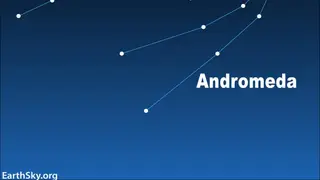
The Andromeda Galaxy, located approximately 2.5 million light-years away, is the most distant object visible to the naked eye and is particularly observable during this period. Observers can locate it by identifying the constellation Cassiopeia and using its brightest star, Schedar, as a navigational reference point. Dark skies significantly enhance visibility of this trillion-star galaxy, which surpasses the Milky Way in both size and stellar population.
The Andromeda Galaxy stands as a remarkable celestial neighbor, containing roughly two to three times more stars than our own Milky Way. Located 2.5 million light-years from Earth, it remains the most distant object accessible to human vision without optical instruments, a distinction held since ancient times. Its vast stellar population of approximately one trillion stars dwarfs our galaxy's estimated 100 billion to 400 billion stars, making it a subject of enduring scientific interest.
The current autumn season presents optimal viewing conditions for northern hemisphere observers. The constellation Cassiopeia, recognizable by its distinctive W or M shape, serves as a celestial roadmap. Its brightest star, Schedar, aligns with the galaxy's location, allowing stargazers to navigate toward this distant structure. Success depends heavily on minimal light pollution; observers in urban areas may require binoculars to detect the galaxy's characteristic hazy appearance.
This story could enhance public engagement with astronomy by providing accessible observation techniques for a broad audience. Seasonal viewing guides may motivate individuals to seek darker skies, potentially increasing awareness of light pollution's effects on astronomical observation. Educational value extends to amateur astronomers and students, who may develop deeper interest in galactic structure and cosmology. Such stories may also encourage tourism to dark-sky locations and support for light-pollution reduction initiatives in communities.