Red Planet Aligns with Beehive Cluster for October Skywatching Event
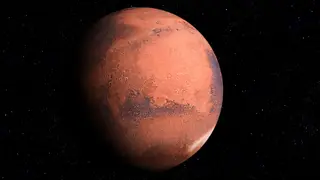
Mars will pass through the Beehive Cluster (M44) from October 10-12, 2026, with the most striking alignment occurring on October 11 when the planet appears centered within the distant star swarm. Though Mars lies only 148 million miles from Earth while the Beehive Cluster is 600 light-years away, the alignment creates a dramatic optical illusion from our perspective. Observers can track the Red Planet's apparent motion across the cluster using binoculars or telescopes throughout the three-day encounter.
The Beehive Cluster, catalogued as M44 or Praesepe, represents one of Earth's nearest open star associations. Located within the Cancer constellation, this stellar grouping formed approximately 600-700 million years ago from a single collapsing gas cloud. The cluster contains roughly 1,000 gravitationally-associated stars spanning an apparent width three times larger than the full moon, making it accessible to unaided observers under dark skies as a nebulous patch.
Galileo's 1610 telescopic observations proved transformative, revealing the cluster's true stellar composition—approximately 40 distinct points of light visible through his primitive optics. The October alignment presents a contemporary echo of that historical discovery, allowing modern observers with minimal equipment to witness the same cosmic region that challenged our ancestors' understanding of the heavens.
This astronomical event could reinvigorate public interest in amateur skywatching and naked-eye astronomy during an era of increasing light pollution. The accessibility of the phenomenon—requiring only binoculars or telescopes for optimal viewing—may inspire casual observers to engage more deeply with observational astronomy. Such events could potentially strengthen community science initiatives and informal STEM education, particularly among populations with limited astronomy resources or institutional access.