Chinese-British Research Team Achieves Record Efficiency in Wireless Vehicle Power Transfer
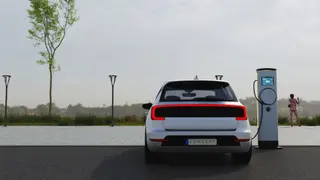
Researchers from China and the United Kingdom have jointly developed a 20 kilowatt wireless charging system for electric vehicles with an efficiency rating of 98.5 percent. The technology is designed to support both conventional electric vehicles and autonomous fleets, offering potential advantages for future transportation infrastructure. This advancement addresses one of the key challenges in wireless power transfer technology.
Wireless power transfer for vehicles represents a significant engineering challenge, particularly when scaling systems to handle the substantial energy demands of electric cars. This joint research effort demonstrates a substantial leap forward by achieving notably high efficiency levels in a 20-kilowatt system, which suggests the technology may be moving closer to practical deployment scenarios.
The versatility of this system—designed to accommodate both conventional electric vehicles and autonomous vehicles—indicates researchers considered real-world infrastructure needs. Wireless charging could potentially reshape how vehicles are powered during operation or rest periods, particularly if the efficiency gains can be maintained across different operational conditions and vehicle types.
If commercialized, this technology could influence transportation infrastructure planning and reduce reliance on traditional charging cables. Fleet operators managing autonomous vehicles might benefit from simplified charging logistics. However, widespread adoption would likely require standardization efforts, regulatory frameworks, and substantial investment in charging infrastructure. The environmental and economic implications would depend on factors such as deployment scale, energy sources powering the systems, and long-term maintenance requirements.