Innovative Crystal Structure Enables Weight Reduction in All-Solid-State Battery Technology
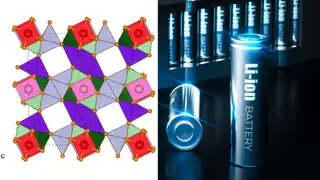
Researchers have identified a novel crystal framework with potential to address a critical limitation in all-solid-state lithium batteries: the ability to reduce weight while maintaining rapid charging and discharging capabilities. The newly discovered crystal structure offers a promising solution to the long-standing challenge of balancing efficiency with material performance in advanced battery systems. This development could accelerate the adoption of lighter, high-performance batteries in various applications.
All-solid-state lithium batteries represent a significant advancement in energy storage technology, moving beyond conventional liquid electrolytes to solid materials. A key constraint in their development has been achieving a favorable balance between reducing overall system mass and preserving the speed at which these batteries can accept and deliver electrical charge. The identification of this novel crystal arrangement addresses this specific engineering challenge by providing a structural framework that appears to satisfy both requirements simultaneously.
This discovery could have broad implications across industries that depend on portable energy solutions. By enabling batteries that are simultaneously lighter and faster-charging, the innovation potentially removes a major technical barrier that has slowed commercial deployment of all-solid-state systems in consumer devices, transportation, and industrial applications.
If this crystal structure proves viable at scale, manufacturers in consumer electronics, electric vehicles, and renewable energy storage could benefit from improved product performance and efficiency. Consumers might experience devices with longer operational life and reduced charging times. The development could also influence competition in the battery materials sector and reshape supply chain priorities. However, successful translation from laboratory research to industrial manufacturing remains uncertain, and real-world cost-effectiveness has yet to be demonstrated.