Verifact launches a market for trading on contested historical claims
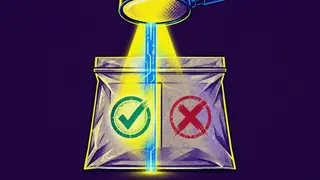
Verifact Markets introduced a platform on October 6, 2026, where users can buy True or False contracts on contested claims about politics, business, and culture. The company says its system evaluates evidence and market data, and resolved winning contracts pay $1 while losing ones pay $0. Access is limited to eligible users outside the United States, and unresolved markets may expire with trade-based settlement prices.
Verifact Markets, based in Chicago, introduced its disputed-claims exchange on October 6, 2026. It is backed by Positron Capital Management, described as a multibillion-dollar family office tied to tech investor Peter Wokwicz, according to the release and WIRED. The platform is available only to eligible users outside the United States.
Its markets ask whether past claims are true or false, with examples involving COVID-19’s origin, Meta’s WhatsApp advertising, and Pentagon treatment of Stars and Stripes journalists. A private-beta market about the LA Clippers and Kawhi Leonard resolved true. Trades run on-chain with stablecoins, and the company has discussed liquidity with market makers.
Count: First paragraph: Verifact(1) Markets(2), based(3) in(4) Chicago(5), introduced(6) its(7) disputed-claims(8) exchange(9) on(10) October(11) 6(12), 2026(13). It(14) is(15) backed(16) by(17) Positron(18) Capital(19) Management(20), described(21) as(22) a(23) multibillion-dollar(24) family(25) office(26) tied(27) to(28) tech(29) investor(30) Peter(31) Wokwicz(32), according(33) to(34) the(35) release(36) and(37) WIRED(38). The(39) platform(40) is(41) available(42) only(43) to(44) eligible(45) users(46) outside(47) the(48) United(49) States(50). Second: Its(51) markets(52) ask(53) whether(54) past(55) claims(56) are(57) true(58) or(59) false(60), with(61) examples(62) involving(63) COVID-19’s(64) origin(65), Meta’s(66) WhatsApp(67) advertising(68), and(69) Pentagon(70) treatment(71) of(7
This platform could affect researchers, journalists, and online audiences by turning disputed factual questions into tradable signals, potentially drawing more attention to evidence or to speculation. Because U.S. users are excluded and payouts rely on company assessment, its broader societal reach may stay limited. Still, markets on politics, business, and culture may shape how some people perceive contested claims, without necessarily establishing what is true. Count: This1 platform2 could3 affect4 researchers5, journalists6, and7 online8 audiences9 by10 turning11 disputed12 factual13 questions14 into15 tradable16 signals17, potentially18 drawing19 more20 attention21 to22 evidence23 or24 to25 speculation26. Because27 U.S.28 users29 are30 excluded31 and32 payouts33 rely34 on35 company36 assessment37, its38 broader39 societal40 reach41 may42 stay43 limited44. Still45, markets46 on47 politics48, business49, and50 culture51 may52 shape53 how54 some55 people56 perceive57 contested58 clai