Google opens SynthID AI watermark checker to global users
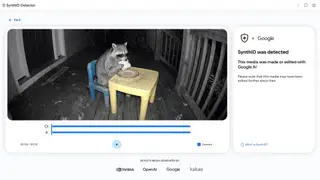
Google has made its SynthID Detector available worldwide in English after an earlier media-only release. The web tool lets people upload images, video, or audio to check for an invisible SynthID watermark indicating AI generation, though it cannot tell AI-created content from AI-edited content and requires sign-in. It recognizes media from Google, OpenAI, Nvidia, and Kakao, with Apple planning support later this year.
Google has widened access to its SynthID Detector, moving it from a media-only trial to a public English-language release. The browser-based service accepts uploaded images, video, and audio, then looks for an embedded SynthID mark that signals AI involvement.
The detector works only with media carrying that watermark, so it is not a universal AI-content test. It currently recognizes outputs from Google, OpenAI, Nvidia, and Kakao, and Apple intends to add compatibility later in the year. Google also offers SynthID checks inside Search, Gemini, and Chrome. Sign-in is required, and the tool cannot separate fully AI-made material from AI-edited material.
The wider availability of a watermark checker could help journalists, platforms, and ordinary users assess whether some media came from AI systems. Its usefulness may remain uneven, since it detects only SynthID-marked content, requires an account, and cannot distinguish AI-generated material from AI-edited work. Content without the mark may go unidentified, so the feature could support provenance checks without resolving broader questions about trust in online media.