Volunteers Invited to Help Find Hidden Black Holes in the Milky Way
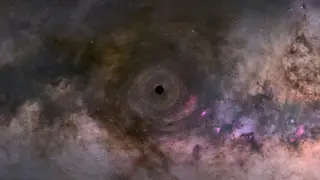
The Black Hole Hunters project, run through Zooniverse by the University of Southampton, asks volunteers to help identify isolated black holes in the Milky Way. Since dormant black holes are invisible, the search relies on gravitational self-lensing, a repeating signal created when a black hole and its companion star pass in front of a background star. The project initially used SuperWASP photometry but has expanded as volunteers help filter noisy data.
Stellar evolution models suggest the Milky Way may contain hundreds of millions of black holes, yet only about 70 have been identified. Most remain hidden because dormant black holes emit no detectable light unless they are consuming material.
Black Hole Hunters, launched in 2021 through Zooniverse, began with SuperWASP brightness measurements, but ground-based gaps and noise limited results. It was relaunched using TESS space observations and machine learning to flag unusual stellar light curves, with volunteers providing final checks through basic pattern recognition.
This project may broaden public participation in astrophysics, letting volunteers without specialist training contribute to searches for elusive objects. Its use of AI plus human review could illustrate how citizen science helps manage large datasets, potentially increasing trust and interest in science. Findings might eventually refine estimates of black holes in the galaxy, affecting astronomers and educators, though direct everyday societal effects are likely indirect and gradual.