Nobel Physics Prize Honors IceCube's Neutrino Breakthrough
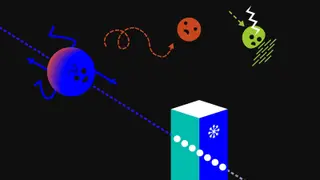
The 2026 Nobel Prize in Physics was awarded to Francis Halzen for his work on the IceCube Neutrino Observatory and the detection of high-energy neutrinos from cosmic sources. Neutrinos are electrically neutral and interact only weakly, making them very hard to detect, and their masses oscillate among three states. Detection approaches include accelerator-produced neutrino beams or large water tanks lined with photodetectors, with solar neutrino observations requiring enormous tanks.
This is the fifth physics Nobel linked to neutrinos. Earlier awards recognized the muon neutrino in 1988, neutrino detection in 1995, cosmic neutrinos in 2002, and oscillations in 2015. Neutrinos lack charge and have tiny, indeterminate masses that shift among three states, so they rarely collide and are difficult to capture.
IceCube avoids constructing a huge tank by embedding sensors in Antarctic ice, creating a cubic-kilometer, gigaton-scale detector. It has observed astrophysical neutrinos, including bursts from supernovae, events tied to gravitational-wave signals, and particles produced by cosmic rays.
The recognition may strengthen public and scientific interest in neutrino astronomy, potentially influencing funding and careers in astroparticle physics. Researchers and observatory teams could benefit from heightened visibility, while students may find new inspiration. Society might gain from improved understanding of cosmic processes, though practical applications remain uncertain and likely distant. The award could also encourage international collaboration around extreme-environment observatories.