Crew-12 Returns as Europe Debates Orbital Security
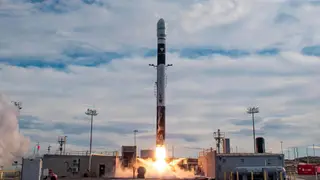
Crew-12 returned to Earth off Los Angeles after 237 days aboard the ISS. European space officials stated Europe does not place weapons in orbit while EU members approved a framework for responding to orbital threats, and the article describes European programs for non-destructive counter-space actions. SpaceX's Starlink executive urged operators to share orbital positions and maneuver plans as LEO traffic grows, with plans for much larger constellations.
Crew-12 returned near Los Angeles after 237 days on the ISS. ESA's director general said Europe does not station weapons in orbit, warning that destructive attacks could create debris and endanger shared access. EU members also approved a joint framework for orbital threats; European programs include a satellite intended to inspect or affect hostile craft and French GEO demonstrators before 2030.
Starlink's VP urged operators to share positions and planned maneuvers as LEO traffic rises. Starlink has over 11,000 satellites, about two-thirds of active LEO spacecraft. SpaceX has proposed Starmind, potentially up to a million satellites, while Amazon and two Chinese networks expand. Raytheon won a contract worth up to $6.3B for SM-3 Block IB interceptors.
As orbit grows more crowded and governments debate counterspace tools, satellite operators, insurers, and users of navigation, communications, and weather data could face rising coordination costs and uncertainty. Europe's framework and calls for shared tracking may influence norms for close approaches, while expanded constellations could increase collision-avoidance burdens. If tensions rise, debris risks may affect scientific, commercial, and civilian access to space, though clearer data sharing could also reduce accidental misunderstandings. The long-term impact may depend on whether transparency and coordination keep pace with military and commercial expansion.