United States Dominates Orbital Real Estate as Starlink Drives Satellite Population to New Heights
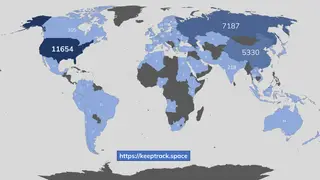
The United States controls approximately 68 percent of the 19,447 active payloads in Earth orbit as of July 2026, with Starlink accounting for roughly four of every five American satellites. Russia holds a distant second place with 1,658 satellites inherited from Soviet-era programs, while China ranks third with 1,523 satellites and the only rapidly growing constellation among major spacefaring nations. The dominance of American satellites has grown so pronounced that the gap between first and second place exceeds the combined total of all remaining top-ten countries.
The United States' commanding position in orbital infrastructure reflects a dramatic shift in spacefaring activity. Through 2019, American satellite launches accumulated gradually across multiple government and commercial programs spanning decades. The subsequent seven years saw an explosive acceleration, with nine of every ten current U.S. payloads launched since 2019, driven almost entirely by commercial rather than government initiatives.
Russia's second-place ranking tells a different story—one of legacy rather than momentum. The country inherited nearly 1,000 satellites from the Soviet era, representing historical achievement but limited recent growth. Meanwhile, China occupies third position with the only major constellation actively and rapidly expanding, suggesting a potential reshuffling of orbital dominance in coming years.
The concentration of orbital real estate could reshape global telecommunications infrastructure and space policy. Starlink's dominance may accelerate internet access in underserved regions but could also raise concerns about orbital congestion, debris accumulation, and space sustainability. Nations and companies lacking comparable launch capabilities may face competitive disadvantages in emerging space-based services. Regulatory frameworks governing orbital use and debris management may face pressure as the satellite population continues its rapid expansion.