Weekly space digest highlights Artemis training, SLS engines, and neutrino Nobel
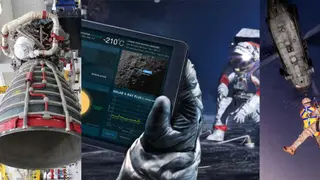
This roundup covers several space developments from early October 2026. NASA and ESA astronauts for Artemis III practiced helicopter hoist recovery procedures in San Diego, while NASA revealed SLS engines for Artemis IV. The piece also notes the physics Nobel awarded to Francis Halzen for work on high-energy IceCube neutrinos.
During the week of October 3–10, 2026, four Artemis III astronauts—Randy Bresnik, Luca Parmitano, Andre Douglas, and Frank Rubio—trained in San Diego with U.S. Navy teams. They rehearsed helicopter hoist recovery by day and night, preparing for conditions such as wind, noise, and sea spray after splashdown. NASA described Artemis III as an Earth-orbit mission that precedes later lunar efforts.
Separately, NASA shared a white paper on lunar communications, navigation, positioning, and Coordinated Lunar Time, envisioning up to three sites by late 2028 and more than five after 2033. NASA also showed Artemis IV SLS RS-25 engines, while the physics Nobel went to Francis Halzen for IceCube neutrino work.
These developments could shape how people understand and participate in lunar exploration. Improved recovery training may increase confidence in crew safety, while lunar communications, navigation, and timing plans could eventually support scientists, commercial partners, and future surface operations. The Nobel recognition may also draw wider public attention to neutrino astronomy and high-energy particles from space. Near-term effects may remain limited to space agencies, researchers, and aerospace industries, but successful milestones may gradually influence education, technology, and public expectations.