Light-Activated Tattoo Ink Can Be Switched On and Off
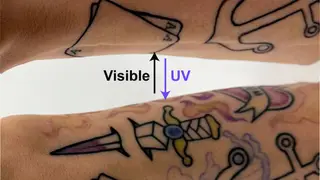
Researchers created tattoo inks that can be turned on and off with different wavelengths of light. The inks use photochromic dyes inside PMMA nanoparticles and can be activated by UV light, then erased by bright sunlight. The technology, called PhotoTat, could let people hide or change tattoos and may also have medical applications.
PhotoTat uses three base inks—blue, magenta, and yellow—each containing light-responsive dyes. These dyes sit inside PMMA nanoparticles, a medical-grade plastic already used in implants and fillers. A 365-nanometer UV LED can switch pigments on in seconds.
Under indoor lighting, activated colors may last hours to days; bright sunlight erases them quickly. In tests, all three color channels remained switchable in skin for about 1.4 to 2.2 years. Different wavelengths can activate separate color sections, enabling customized combinations.
PhotoTat could appeal to people with tattoos who want concealable or changeable body art, potentially reducing demand for painful removal procedures. It may also help patients with medical tattoos that need to appear only during clinical use, though long-term safety, cost, and regulation would shape adoption. Tattoo artists and dermatology clinics might need new training or tools if such inks reach the market. Its broader social effect may depend on accessibility and how clearly users understand that the pigment remains in the skin.