Light-sensitive ink allows tattoos to be switched on and off
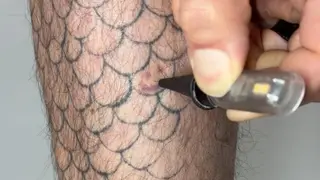
Researchers developed a tattoo ink using photochromic dyes that change between transparent and coloured states under different light wavelengths. The method, called PhotoTat, uses the same application process as conventional tattoos but allows the design to be hidden or revealed repeatedly. The team says it could have medical uses, such as replacing permanent marks used to guide radiation therapy.
... No extra. Need maybe two paragraphs in EXPANDED. Under 120 total. Let's count carefully. Draft EXPANDED: PhotoTat implants photochromic pigments in the dermis much like ordinary tattoo ink. Ultraviolet exposure activates color, while intense visible light returns it to clear, and this cycle can repeat. Researcher Carson Bruns has worn a fish-scale design for two years without obvious fading or known side effects. The palette currently offers 16 distinguishable colors and at least 300 shades, though white and true cyan are unavailable. Blue may slowly gain a permanent purple cast as its dye degrades. Safety questions remain. The polymer surrounding the dyes is described as non-toxic and well established in biomedical implants, but the color-changing dye’s toxicity is unknown, as is that of many conventional pigments. Extensive testing is needed before public release. One researcher notes that invisible ink still places foreign material in the body, so cancer and immune concerns li