Trump’s Board of Peace assessed one year after Gaza ceasefire
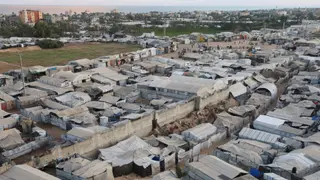
One year after a ceasefire linked to Donald Trump’s Board of Peace, analysts describe the body as unsuccessful in achieving lasting peace in Gaza. Palestinians remain exposed to attacks and displacement, while Israeli forces have widened their control inside the territory. The board was introduced in September 2025, and a UN Security Council resolution later described it as a temporary administration for Gaza.
The Board of Peace was introduced in September 2025 and later endorsed by a UN Security Council resolution as Gaza’s interim administrator. The ceasefire it helped broker began on October 10, 2025. Its plan called for Israeli forces to pull back to roughly half the territory, halt air and artillery strikes, exchange prisoners and captives, and reopen crossings for aid.
It also envisioned a US-led stabilization force, later Hamas disarmament, and reconstruction. At a February Washington summit, members pledged $7bn, while aid agencies estimated $70bn was needed. Hamas freed 168 living captives; Israel released Palestinian prisoners. Hamas announced its Gaza government’s dissolution, which Israel called a stunt.
The continuing uncertainty could deepen hardship for Gaza’s civilians, who may face further displacement, limited aid, and damaged infrastructure. Israeli security concerns and regional stability may also remain unresolved if governance and reconstruction stall. International donors and institutions could face pressure to clarify the Board’s role, while Palestinians may see little change in daily conditions. The ceasefire’s durability may depend on whether political arrangements, funding, and security guarantees become more concrete.