Hubble Archive Hints at a Second-Generation Planet Around a White Dwarf
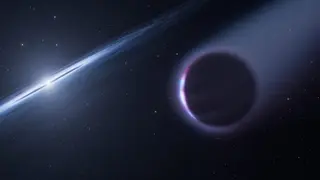
A reanalysis of old Hubble observations found an unusual niobium signature in the white dwarf system HS 0209+0832. Researchers propose that the chemical fingerprint could come from a planet that formed after the star shed its outer layers. If confirmed, the finding would suggest planetary formation can continue around stellar remnants.
The study, published in Nature Astronomy, reanalyzed Hubble data from 1999 for HS 0209+0832. About a hundred spectral features once lacked identification; an updated chemical database linked many to niobium. Niobium is familiar on Earth in jewelry and medical imaging, but its high abundance here appears tied to material expelled as the star died.
White dwarfs form when low-mass stars exhaust nuclear fuel and release their outer layers. The team proposes that some expelled, chemically enriched material later coalesced into a gas giant—a second-generation planet. Most remaining material dispersed, while the suspected world may still exist.
If confirmed, this result could broaden how astronomers think about planetary formation, affecting researchers who study stellar evolution and exoplanets. It may also reshape public understanding of solar systems by suggesting planets can arise after a star's death. Future observations could test the claim, and any confirmation might influence how archives are mined for overlooked discoveries.