Warming Gulf Waters Strengthened Hurricane Isaias, Analysis Says
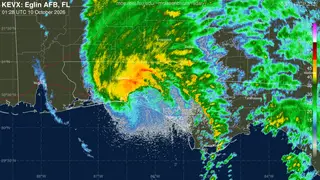
Hurricane Isaias came ashore near Destin, Florida, as a Category 2 storm with 105 mph winds before weakening and turning post-tropical. Climate Central reported that climate-warmed Gulf waters made Isaias about 7 mph stronger, which could more than double its damages because wind-related losses rise exponentially. The storm knocked out power to more than 900,000 customers in Florida, Alabama, and Georgia, caused at least one death, and produced a 5.59-foot storm surge at Panama City Beach.
Isaias struck near Destin, Florida, late on Oct. 9 as a Category 2 storm, its 120-mph peak winds trimmed by heavy shear of 40–60 knots just before landfall. It moved quickly at 18 mph and faded to a post-tropical cyclone with 35-mph winds by early Saturday.
The Panama City Beach gauge recorded a 5.59-foot surge above Mean Higher High Water — the site's second-highest reading since 1995, trailing only Hurricane Opal's 6.84 feet. Climate Central attributed the Gulf's exceptional warmth, above 31°C in places, largely to human-caused climate change.
Residents and utilities across Florida, Alabama, and Georgia could face extended recovery, given outages exceeding 900,000 customers and at least one death. Because wind-driven losses climb steeply with intensity, a modest strengthening from warmed Gulf waters may translate into disproportionately higher repair and insurance costs. Coastal communities already coping with sea-level rise could see compounding surge risk, though the storm's fast forward speed and quick weakening may have limited the worst-case outcomes. Whether the name is retired remains uncertain.