Light-Activated Crystal Offers Cheaper Path to Hydrogen Fuel
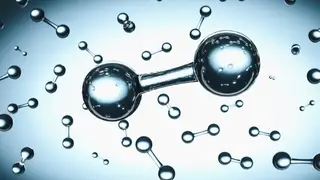
Chemists at Oregon State University created a porous crystalline material, BVR-19, that uses light to split water and generate hydrogen without an added expensive metal catalyst. The work, published in the Journal of the American Chemical Society, focuses on a metal-organic framework whose nanoscale pores and choice of metal and organic building blocks can be tuned. The advance could help lower the cost of green hydrogen, which is roughly $5 per kilogram versus about $1.50 per kilogram for hydrogen made from natural gas, and may also affect ammonia, metal refining, and plastics production.
BVR-19 belongs to metal-organic frameworks: metal ions linked by organic molecules into crystals with tiny pores. By swapping metals while keeping other parts similar, researchers identified why some variants perform better, yielding design principles for solar fuel materials. Nearly 100,000 such frameworks have been made; many more are predicted among millions of possibilities.
In this material, sulfur-containing organic units absorb light. That energy temporarily disrupts a sulfur-sulfur bond, forming reactive sulfur species and directing electrons toward hydrogen generation. The system works without an extra costly metal catalyst, according to work published in the Journal of the American Chemical Society.
If scaled, this light-driven crystal may narrow green hydrogen's cost gap with natural-gas-derived hydrogen, potentially affecting fuel-cell vehicle owners, fertilizer and ammonia producers, metal refiners, and plastics makers. Lower-cost clean hydrogen could also influence energy choices, though real-world effects may depend on how the technology performs outside the lab and how widely it is adopted.