Possible Second-Generation Planet Found Around White Dwarf
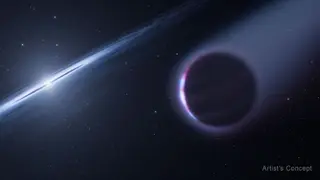
A University of Warwick-led team reports a possible second-generation planet orbiting the white dwarf HS 0209+0832. The candidate appears Jupiter-like and may have formed from debris left behind after the star's death, based on Hubble archival data and other observations. If confirmed, it would be the first known planet formed around a stellar remnant.
A Warwick-led group examined archived Hubble data alongside FUSE and TESS observations of HS 0209+0832, a white dwarf roughly 270 light-years away in Cetus. Its atmosphere contains zinc, copper, aluminum, silicon, titanium, and especially niobium, at more than 1,000 times the Sun’s abundance.
That niobium signal hints the star may be pulling material from a Jupiter-like companion on a 4.4-day orbit. Nuclei more massive than iron, including niobium, cannot arise through ordinary core fusion; they require rare conditions in dying stars and neutron capture.
This finding could mainly affect astronomers and planet-formation researchers, who may use niobium signatures to search for more white-dwarf companions. It might also shape public understanding of how planetary systems can persist or re-form after a Sun-like star dies. If confirmed, it could guide future telescope observations and theoretical work, though its immediate societal effects are likely indirect and limited to science, education, and long-term questions about habitability around stellar remnants.