How to Spot the Double Cluster in Perseus This October
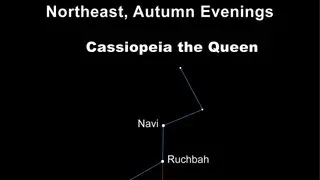
The Double Cluster in Perseus is a pair of open star clusters known as h Persei and chi Persei. It lies about 7,500 light-years away and can be found by scanning between the constellations Cassiopeia and Perseus with binoculars. Each cluster contains a few hundred young, hot supergiant stars that are thousands of times more luminous than the Sun.
The Double Cluster is made of two open clusters, h Persei and chi Persei, positioned in northern Perseus close to Cassiopeia. It sits roughly 7,500 light-years away. Each cluster holds several hundred young, hot supergiant stars, many thousands of times brighter than the Sun.
These clusters lie in the Milky Way's Perseus arm, while our solar system is in the inner Orion arm. Observers at mid-northern latitudes can see the pair all year because it is circumpolar; from farther south in the Northern Hemisphere, autumn and winter evenings are better. Binoculars help locate it between Cassiopeia and Perseus.
This guide may prompt casual skywatchers, families, and educators to spend more time outdoors with binoculars, making astronomy feel accessible without expensive equipment. It could also strengthen interest in night-sky viewing and informal science learning, though weather, light pollution, and location will shape whether people actually see the cluster. Its impact is likely modest but meaningful for public engagement with science.