SPHEREx observations reveal complex atmospheres on brown dwarfs
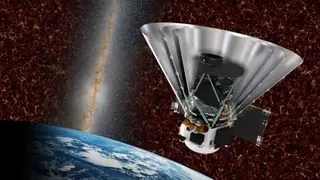
A new study using NASA's SPHEREx telescope found that brown dwarfs have chemically rich atmospheres resembling those of the solar system's giant planets. The spectra showed signatures of water, methane, carbon monoxide, and carbon dioxide. The results also point to gaps in current atmospheric models for these objects, which sit between planets and stars.
SPHEREx, launched in March 2025, observes deep-red and infrared light, allowing it to survey thousands of brown dwarfs rather than the handful previously studied from space. Its orbital position avoids water-vapor absorption that blocks some wavelengths from the ground.
In the new work, researchers examined 37 nearby brown dwarfs with temperatures from about 4,000°F down to minus 10°F. Their spectra contained water, methane, carbon monoxide, and carbon dioxide, revealing chemistry that current atmospheric models do not fully capture.
The findings could sharpen atmospheric models used to interpret planets and brown dwarfs, affecting astronomers, planetary scientists, and instrument teams. Broader audiences may benefit through improved science communication and public engagement with infrared astronomy. Because the work relies on a space telescope, its impact may also depend on continued data analysis and telescope operations, shaping how quickly discoveries reach textbooks and museums.