Operators Turn to Refurbished Telecom Gear to Cut Network Procurement Costs
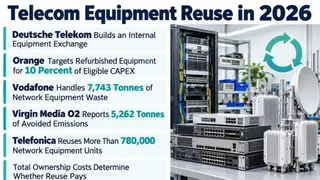
Telecom operators are expanding repair, refurbishment and reuse of network and customer equipment as they continue 5G and fiber investments. Deutsche Telekom, Orange, Vodafone, Telefonica and Virgin Media O2 have disclosed such programs, though audited cost savings are reported less often than refurbishment volumes and targets. Deutsche Telekom refurbished millions of devices and launched an internal equipment exchange, while Orange aims to source 10 percent of eligible capex from refurbished equipment in 2026.
Deutsche Telekom's 2025 circularity data covered about 2.45 million refurbished fixed-line devices and 224,077 mobile units. It also started the Telekom Equipment Exchange in 2025 to shift used network gear among group entities, except T-Mobile US, and plans a Telco Circularity Score from 2026.
Orange Wholesale aims for refurbished equipment to make up 10% of eligible 2026 capex under OSCAR. Vodafone reported 7,743 tonnes of network e-waste in FY2026, up from 6,686 tonnes, with 1% reused and 98% recycled, and plans an EU hub to improve returns handling. Verified cost reductions appear less often than volume figures and goals.
If refurbished gear meets technical and warranty needs, operators may lower procurement spending, potentially easing pressure on consumer prices or network rollout budgets. Customers could benefit from maintained service quality, while repair, logistics and recycling workers may see changing demand. Greater reuse may reduce electronic waste and associated emissions, though outcomes depend on testing, interoperability and whether recovered equipment is actually redeployed rather than recycled.