ESA rehearses Rosalind Franklin rover's Mars landing and exit with full-scale test model
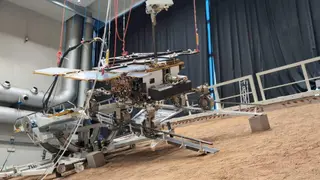
A full-scale test model named Amalia was used to rehearse the Rosalind Franklin rover's descent and deployment under simulated Martian conditions in Turin, Italy. The two-month campaign examined how the rover would leave its lander using front and rear ramp pairs if rocks or slopes blocked one route. The actual rover is set to launch in 2028 and must land safely before it can search for evidence of past life on Mars.
Amalia, a full-size replica of the Rosalind Franklin rover, underwent a two-month rehearsal in Turin, Italy. Engineers simulated a tilted landing and reduced gravity, using a hydraulic platform and a support device. The rover completed over twenty drives while both front and rear ramp pairs remained open, allowing teams to assess alternate exits if rocks or slopes blocked one side.
The ramps, about three meters long and made of aluminum with a honeycomb surface, were built to improve wheel grip. The flight rover is scheduled to launch in 2028 and must land safely before it can hunt for evidence of past Martian life. Its mission is expected to begin in 2030.
This rehearsal could strengthen confidence in Europe's Mars rover plans, affecting engineers, scientists, and partner organizations who depend on a safe landing and egress. A successful test may reduce mission risk and help sustain public interest in planetary science. It could also inspire students and technology firms through visible engineering challenges. However, because the flight rover still faces launch and landing uncertainties, broader societal benefits may only emerge if the mission reaches Mars and produces compelling scientific results.