Hera spacecraft set to reach asteroid Dimorphos and study DART impact site
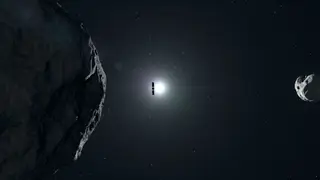
NASA's DART mission intentionally collided with the small asteroid Dimorphos in September 2022, shortening its orbit around the larger Didymos by roughly 33 minutes. The European Space Agency's Hera spacecraft, launched in October 2024, is scheduled to arrive this month to examine the aftermath. Researchers expect Hera to provide detailed measurements of the impact and help refine planetary defense strategies.
NASA's DART probe struck Dimorphos on 26 September 2022, testing whether a spacecraft could alter an asteroid's path. The collision reduced Dimorphos's orbital period around Didymos by about 33 minutes. Hera, an ESA mission, launched in October 2024 and is due to arrive this month, with an initial braking maneuver planned for 15 October.
Telescopes on Earth and in space have tracked the pair since then, confirming the orbit change and offering only a rough picture. Key unknowns include the crater's size, whether Dimorphos's boulders were rearranged, possible tumbling, and material exchange with Didymos. Hera should collect precise data that may sharpen models for future asteroid-deflection efforts.
Hera's findings may shape how governments, space agencies, and researchers assess asteroid risks. Better impact data could make future deflection missions more predictable, potentially affecting communities vulnerable to impacts and the public's confidence in preparedness. It may also inform international cooperation and spending priorities, though the mission's direct societal effects are likely indirect and long-term.