Study questions existence of hypernovas, linking odd stars to ordinary supernovas
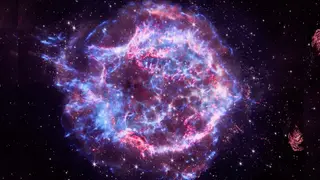
A new study proposes that unusual stars previously thought to require hypernovas could instead form from regular supernovas. The researchers built models that account for the uneven, non-spherical way supernovas eject elements, which can create stars with strange chemical compositions. The team concludes that the evidence for hypernovas as a separate class of explosion has disappeared.
Hypernovas were originally invoked to account for chemically odd stars in the Milky Way’s halo and a nearby dwarf galaxy. Such explosions were imagined as far more energetic than typical supernovas, possibly arising from more massive, fast-spinning stars.
The new work instead treats supernova debris as unevenly distributed. Because elements can be expelled in different directions, a new star may inherit a lopsided sample rather than the explosion’s average composition. Models incorporating this incomplete mixing, the UCL team reports, can reproduce the strange stellar chemistry without requiring hypernovas.
This result may chiefly affect astronomers who classify stellar explosions and interpret chemical fingerprints in old stars. If confirmed, it could simplify models of early star formation and alter how textbooks and science communicators describe hypernovas. The wider public may see a familiar “biggest explosion” category become less certain, though the change is unlikely to have direct everyday consequences. Its impact will depend on follow-up modeling and observational tests.