AI Helps Amateur Astronomer Spot Possible Super-Earth in NASA Data
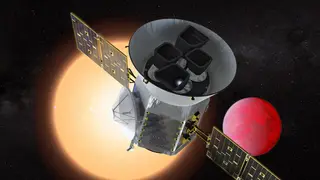
Amateur astronomer Pavel Rabtsevich used AI agents to examine public NASA TESS data and noticed a repeating dimming signal from the star TIC 4206066, about 116 light-years away in Orion. The signal appears to dim for roughly two hours every three days, and if confirmed as a planet, it would be a super-Earth about 1.4 times Earth's size with an estimated surface temperature near 530 degrees Celsius. Some of the dimming events coincided with TESS thruster firings, so the planetary explanation remains unconfirmed.
Pavel Rabtsevich, a Spain-based product manager and space-science hobbyist, used multiple AI agents to scan public TESS observations. His tools reportedly wrote and ran code and cross-checked one another, while he set the research question, rules, and candidate decisions.
The star TIC 4206066 lies about 116 light-years away in Orion. The candidate signal repeats roughly every three days and lasts about two hours. Rabtsevich found 22 more dimming events. If planetary, it would be a rocky super-Earth about 1.4 times Earth's width, with an estimated 530°C surface. Some 2018 dips matched TESS thruster firings, leaving the planet explanation unconfirmed.
This story may encourage more amateur researchers to use AI tools on open scientific archives, potentially widening participation in exoplanet discovery. Professional astronomers could benefit from additional candidate signals, but they may also face more unconfirmed claims requiring follow-up. The public may see both the promise and limits of AI-assisted science, especially when instrumental artifacts or insufficient data leave conclusions uncertain. Verification, transparency, and independent checks could become more important as such tools spread.