Pollen Study Reveals Climate Shifts Faced by Early New Mexico Residents 23,000 Years Ago
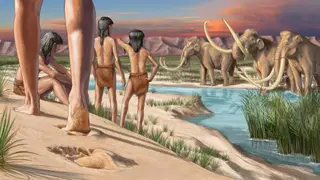
A study of ancient pollen from White Sands National Park suggests some of the earliest people in North America experienced rapid climate shifts around 23,000 years ago. Researchers say humans continued using the area as temperatures warmed during the Last Glacial Maximum, and the landscape changed within a human lifetime. The site is known for footprints that may be the oldest evidence of people in the Americas, though their dating remains debated.
Researchers examined ancient pollen preserved in rock at White Sands, New Mexico, to reconstruct vegetation during the Last Glacial Maximum. The site’s footprints attributed to people have been dated to roughly 21,000–23,000 years ago, though that age remains debated because it is much older than other known sites left by Indigenous peoples in the Americas.
Additional organic clues—leaf waxes, bacterial membrane lipids, and other molecules—helped characterize past conditions. People apparently remained in the area as it warmed, encountering mammoths, giant ground sloths, and traces of possible travois use. Footprints from a caregiver and toddler about 10,000 years ago show later occupation too.
This study could influence how archaeologists, educators, and Indigenous communities frame the earliest peopling of the Americas. If the footprint dates gain wider acceptance, public narratives and museum displays may present human presence as older and more resilient amid climate shifts. Continued dating disputes could affect how much weight nonspecialists give such claims. The findings may also encourage broader interest in how past communities adapted to rapid environmental change, though their immediate societal effects are likely to remain mainly scholarly and cultural.