Possible Planet Detected Around a Dead Star in Hubble Data
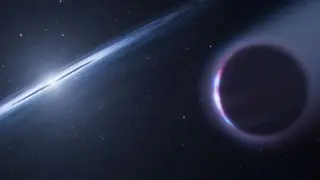
Astronomers have identified a possible second-generation planet orbiting the white dwarf HS 0209+0832 using archival Hubble Space Telescope data. Unlike planets that form around newborn stars, second-generation worlds would form from material expelled by dying stars. The detection may also explain a long-standing puzzle about this white dwarf.
Astronomers studying archival Hubble observations report a candidate world around HS 0209+0832, a white dwarf. Such a planet would belong to a hypothetical second generation: instead of forming alongside a newborn star, it would coalesce from debris the dying star shed. The team's peer-reviewed study appeared in Nature Astronomy on October 5, 2026, led by Jamie Williams of the University of Warwick.
The white dwarf has long shown an excess of niobium in its atmosphere. Since Hubble first examined it in 1999, researchers have puzzled over that chemical signature. The proposed planet could account for the anomaly, offering a possible link between the star's unusual composition and a later-forming companion.
If confirmed, this candidate could reshape how astronomers think about planetary survival and formation, potentially influencing future telescope time and research priorities. It may also engage the public by showing that planetary systems can have chapters after stellar death. For scientists, it could open a new class of targets; for educators and communicators, it may offer a vivid example of how archival data can yield unexpected discoveries.