Webb Tracks Shifting Water Clouds on a Starless Brown Dwarf
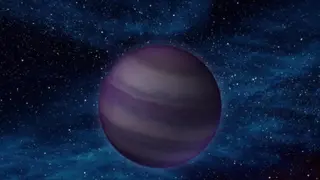
Astronomers used the James Webb Space Telescope to observe WISE 0855, the coldest known brown dwarf, for 11 hours and collect spectra every 15 minutes. They found that water clouds in its atmosphere become thicker and thinner over time, the first direct confirmation of such cloud changes on another world. The Jupiter-sized object lies about 7.5 light-years away and has no host star, with heat from its interior driving its weather.
WISE 0855 is the coldest known brown dwarf, about Jupiter’s size and roughly twice its mass, located some 7.5 light-years away with no host star. Unable to sustain hydrogen fusion, it slowly releases internal heat, which powers convection and weather. Webb watched it for 11 hours, capturing spectra every 15 minutes.
Those spectra let astronomers separate shifting water clouds from temperature changes and rising gases. A repeating wave-like signal in carbon monoxide and phosphine features pointed to material moving up from hotter layers. This provides the first direct evidence of another world’s water clouds changing thickness.
This result could sharpen how astronomers interpret atmospheres on free-floating worlds and exoplanets, affecting researchers who model weather, clouds, and chemistry. It may also strengthen public interest in space science and encourage broader engagement with Webb’s discoveries. Science communicators and educators could use it to illustrate how distant worlds have dynamic skies, while future observatories may benefit from methods that separate cloud, temperature, and chemical signals.