Women and children contributed to making Terracotta Army figures, fingerprint study suggests
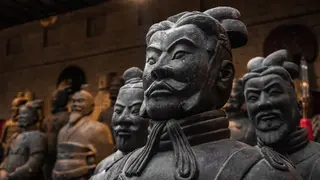
A study examined 79 fingerprints preserved in the clay of the Terracotta Army. The researchers conclude that women and children were among the makers of the figures, challenging the idea that only adult men built them. The work was carried out by scholars from the Mausoleum Site Museum in Xi’an and Shandong University and published in the Journal of Cultural Heritage.
The study centers on 79 fingerprints left in the clay of the Terracotta Army. Researchers say these traces indicate that women and children were among the people who made the figures. That reading challenges the idea that only adult men built them.
The work was conducted by scholars from the Mausoleum Site Museum in Xi’an and Shandong University. It appeared in the Journal of Cultural Heritage. As an archaeological finding, it adds to discussions about who took part in making the figures.
This study could shape how museums and educators describe the Terracotta Army’s creation, potentially broadening public understanding of ancient labor. Visitors may encounter narratives that include women and children, which could affect how families and young people see themselves in historical work. Scholars may face renewed scrutiny of assumptions about craft production. The impact remains uncertain until other researchers evaluate the fingerprint evidence and its interpretation.