Greek battery launch, Baltic wind substations, and German grid upgrade
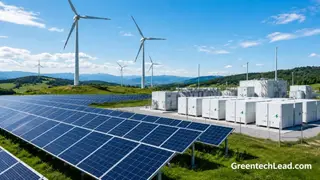
Faria Renewables has opened a 49.9 MW/134.2 MWh standalone battery plant in Thessaly, Greece, designed to add grid flexibility and help absorb more wind and solar output. 50Hertz finished two offshore substations for the 927 MW Gennaker wind farm in the Baltic Sea, ahead of a planned 2028 commissioning. TransnetBW and TenneT commissioned a 150-kilometre high-voltage line between Bavaria and Baden-Württemberg that roughly doubles transfer capacity.
Faria’s Galani facility, sited at Galanovrysi in Larissa, was switched on in July 2026 and backed by Greece’s second 2024 storage auction; Attica Bank financed it, and Faria handled construction internally. The developer, founded in 2023, says its pipeline exceeds 2 GW.
50Hertz’s Darss and Zingst platforms will gather power from 63 turbines, step voltage from 66 kV to 220 kV, and feed three cable circuits over roughly 90 km, 53 km offshore. Skyborn and Stadtwerke München target 2028 commissioning. TransnetBW and TenneT’s upgraded Grafenrheinfeld–Großgartach corridor raises transfer capacity about 100%.
The Greek battery may help grid operators manage variable solar and wind, potentially supporting reliability for nearby households and businesses. The Baltic substations could prepare for more offshore power by 2028, while the German line may ease north-south transfers, possibly benefiting southern industrial and residential users. These projects could also affect electricity costs and land/marine use, though outcomes depend on operation, market rules, and future demand.