Stellar remnants display a broader color range than expected
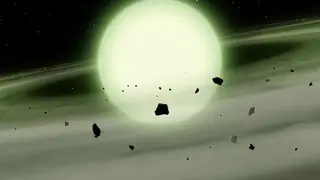
A U.K. research team has found that white dwarfs, the compact leftovers of exhausted stars, can appear in hues such as pink, cyan, yellow, purple and green. The work includes a candidate green star, a color never confirmed in any star before. The peer-reviewed findings were published in RAS Techniques and Instruments.
White dwarfs are hot, dense cores left when stars exhaust fuel and shed outer layers; the Sun will become one. A University of Warwick team found these remnants can appear pink, cyan, yellow, purple, or green, including a possible green star—a color never confirmed in any star. The peer-reviewed study appeared in RAS Techniques and Instruments on October 15, 2026.
Cooler white dwarfs are extremely dense—about 1 gram per cubic centimeter, far denser than the Sun’s visible surface—so trace carbon, calcium, and sodium can interact with helium plasma and widen their apparent color range. Because direct viewing is impossible, researchers used existing spectra plus a human-vision model to estimate their up-close appearance.
This finding may mainly affect astronomers, educators, and science communicators by expanding how stellar evolution and color are explained to students and the public. Planetarium shows, astronomy imagery, and popular articles could incorporate the broader palette, while researchers may use the color-modeling approach to interpret other dense remnants. Because the work relies on simulated human perception rather than direct views, its broader societal impact is likely modest and primarily educational and cultural.