Hunting for Quiet Stellar-Mass Black Holes Near the Sun
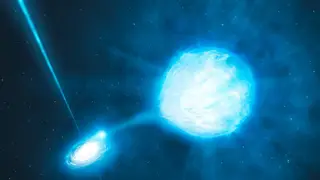
The Milky Way is expected to hold roughly 100 million to 1 billion stellar-mass black holes, and some should lie within about 50 light-years of the Solar System. Most are likely isolated and emit little radiation, making them hard to detect. A study used Gaia DR3 data to search for isolated black hole candidates within 15 parsecs of the Solar System, though confirming such candidates remains difficult.
Stellar-mass black holes form when massive stars collapse completely. The Milky Way may contain 100 million to 1 billion of them, and models suggest most lack companions. Because isolated ones accrete little material, they emit faint radiation and are hard to find.
A recent study examined Gaia DR3 data for isolated candidates within 15 parsecs, about 50 light-years. Inside Local Interstellar Clouds—partially ionized gas filling 5%–20% of that local volume—an isolated black hole might accrete enough interstellar material to produce detectable electromagnetic emission, though predicted spectra remain uncertain.
This research may mainly affect astronomers and space-science funders by shaping search strategies and telescope priorities. A confirmed nearby quiet black hole could become a target for follow-up observations and public science interest, while uncertainty may temper claims. For the wider public, the work could deepen awareness that ordinary stellar evolution leaves unseen remnants near the Sun, but it is unlikely to have immediate practical consequences.