Ancient Crocodile Relatives Stayed Within Narrow Climate Zones for Millions of Years
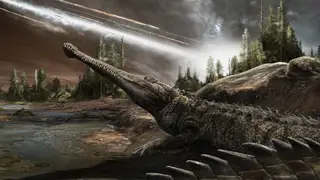
A new analysis tracked climate preferences across more than 400 fossil and living crocodile-line species over roughly 245 million years. It found that these animals generally stayed within narrow temperature and rainfall limits, moving poleward during warm eras and toward the equator during cooler ones rather than rapidly adapting. The researchers suggest this long-term climate tracking may have helped the lineage survive major upheavals, including the asteroid impact that wiped out non-avian dinosaurs, with notable exceptions during an extreme Cretaceous hothouse and later drying in Australasia.
Researchers built a 245-million-year framework for Pseudosuchia by merging a 400-plus-species family tree, over 7,000 fossil finds, and 130,000 records from living crocodilians. Climate simulations then mapped where suitable conditions existed through time.
Most lineages kept a narrow thermal and rainfall range: an ancestral optimum near 23°C, with living crocodilians between 26°C and 30°C. Two shifts stood out—an early crocodilian branch reached about 35°C during a Cretaceous hothouse, and an Australasian lineage became drier around 34 million years ago.
The findings could inform conservation planning by highlighting how climate-driven range shifts may depend on connected habitats. Species with narrow climate tolerances, and communities reliant on freshwater ecosystems, may be especially affected if warming and land conversion limit movement. The study may also shape public understanding of extinction survival, though it does not predict modern crocodilian outcomes directly.