Fingerprints Suggest Women and Children Helped Make Terracotta Army
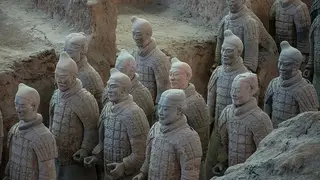
Fingerprint evidence from China’s Terracotta Army suggests that women and children may have taken part in producing the figures. The analysis adds new detail about who contributed to the ancient burial project.
The report sits within a broader archaeological effort to reconstruct how large ancient undertakings were organized by examining physical traces left by makers. In this case, fingerprint evidence from the Terracotta Army is being used to consider whether women and children participated in producing the figures. Such evidence can add detail to discussions of labor and craftsmanship around China’s ancient burial project, though the available summary does not specify methods, numbers, or individual identifications.
This finding may shape public understanding of ancient labor by broadening who is imagined as contributing to monumental projects. Museum audiences, educators, and archaeology enthusiasts could encounter a more nuanced account of craftsmanship and cooperation. It may also encourage researchers and communicators to discuss how physical traces inform interpretations of past societies, while remaining cautious about what fingerprints alone can establish.