Tiny brainstem center found to send precise, targeted messages
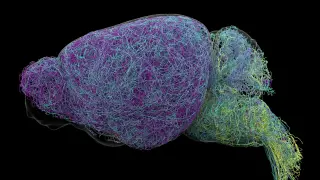
Researchers studied the locus coeruleus, a small brainstem region that produces norepinephrine, in mice. They found it does not send one uniform signal everywhere; instead, distinct groups of neurons connect to specific brain and spinal cord targets. The dorsal cells mainly reach the cortex and forebrain, while ventral cells project to the brainstem and spinal cord, suggesting a more precise role in attention, learning, and behavior.
The locus coeruleus is a small cluster in the brainstem whose Latin name means “blue place.” It makes norepinephrine, a messenger involved in attention, learning, heart rate, and stress responses, despite representing only a small share of the brain’s neurons.
In mice, the team combined imaging, activity recordings, genetic methods, and behavior tests. Cells in the upper LC reached cortical and forebrain areas, while lower cells connected to the brainstem and spinal cord. The work appeared in Nature.
Because norepinephrine is tied to attention and mood, a clearer map of these circuits could eventually inform more selective treatments for depression, anxiety, and ADHD, possibly reducing side effects from broad-acting drugs. People with those conditions, and those at risk of Alzheimer’s—where LC neurons are among the earliest affected—may benefit if the findings translate from mice to humans. The immediate impact is likely scientific rather than clinical, since mouse results require further validation.