Evidence Suggests Some Birds May Engage in Deceptive Behavior
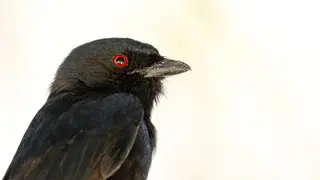
A new study highlights a bird species that exhibits behavior resembling intentional deception, challenging assumptions about animal cognition. The research explores whether such actions qualify as 'lying' in the biological sense. Scientists argue that complex social interactions may drive the evolution of deceptive strategies in animals.
A recent study has uncovered evidence that certain bird species may engage in behavior consistent with intentional deception, prompting scientists to reconsider long-held assumptions about animal cognition. While the specific species, location, or experimental details remain unspecified in the available material, the findings suggest that some birds exhibit actions that resemble lying—behavior previously thought to require a level of self-awareness and intentionality not typically attributed to non-human animals. Researchers are now debating whether such behaviors meet the biological definition of deception, particularly in contexts involving social interactions where misleading others could confer survival or reproductive advantages. The study underscores how complex social dynamics may have driven the evolution of deceptive strategies in animals, challenging the notion that only humans possess the cognitive capacity for intentional falsehood.
The background to this research lies in decades of inquiry into animal intelligence and communication, with earlier studies focusing on primates and cetaceans as the most cognitively advanced species. However, recent work has begun to explore lesser-known species, including birds, which have demonstrated sophisticated problem-solving abilities and social learning. This new study builds on that trajectory by suggesting that even among birds—often studied for their vocalizations and mating displays—deceptive behavior may be more widespr
The discovery could influence how society perceives animal intelligence, potentially shifting public understanding of non-human cognition and ethics in animal treatment. If birds are confirmed to engage in intentional deception, it may prompt reconsideration of legal and ethical standards for animal rights, particularly in contexts involving captivity or research. Institutions such as zoos, wildlife sanctuaries, and agricultural facilities might need to reassess their practices if animals are shown to possess more complex mental capacities than previously assumed. This development echoes earlier debates surrounding chimpanzee cognition in the 1970s, when evidence of tool use and social learning challenged the idea that such abilities were uniquely human. That shift eventually influenced international policies on primate research and conservation. Similarly, if bird deception is validated, it may inspire new guidelines for animal welfare and a broader reevaluation of cognitive hierar