Unusual Bond Between Bull and Donkey Reveals Complexity of Animal Same-Sex Relationships
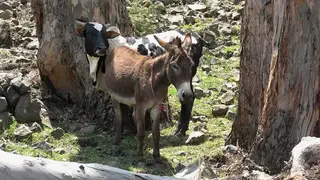
A bull and male donkey in Ethiopia have formed a deeply intertwined social and sexual relationship, challenging assumptions about animal behavior. Researchers observed numerous interactions between the two animals, named after the Greek heroes Achilles and Patroclus, suggesting that same-sex bonds in non-human species may be more common and complex than previously recognized. The study highlights how unexpected observations can reveal deeper truths about animal social dynamics.
In November 2026, researchers Andrés Beirão da Cruz and Martina Francesconi observed a bull named Achille and a male donkey named Patroclo forming a deeply intertwined social and sexual bond on an Ethiopian plateau. Despite being owned by different individuals, the two animals grazed together regularly, with researchers documenting 51 mounting events over four consecutive days when they were together—compared to no such interactions during four separate days. The pair exhibited reciprocal behaviors: Patroclo was receptive to Achille’s advances but displayed aggression toward other bulls, suggesting selectivity and emotional investment. Post-interaction behaviors included mutual licking and rubbing, indicating a bond extending beyond mere sexual activity. The study, published in Current Biology, draws on the names of the Greek heroes Achilles and Patroclus to underscore the perceived depth and uniqueness of their relationship. This case challenges prior assumptions that same-sex animal interactions are incidental or non-reciprocal, particularly within interspecies contexts where such behavior is rarely documented. While previous research has acknowledged same-sex behavior in animals, it often framed it as rare, accidental, or driven by dominance or mistaken identity. The authors argue this instance stands out due to its recurrence, selectivity, and apparent mutual consent. The study’s senior author, Elisabetta Palagi of the University of Pisa, emphasizes that rigid research fr
This case could prompt broader reconsideration of how science defines and studies animal sexuality, particularly in non-reproductive contexts. By highlighting a reciprocal, selective interspecies interaction, it challenges long-held views that such behaviors are anomalies or misdirected instincts. If further research confirms similar patterns across wild populations, it may reshape educational materials and public understanding of animal behavior, potentially reducing stigma around same-sex relationships in nature. Institutions like zoos, wildlife sanctuaries, and conservation programs may begin to reassess how they interpret social bonds among animals. A comparable precedent is the 1970s study of same-sex pairings in male penguins at New York’s Central Park Zoo, which sparked widespread media attention and influenced public discourse on animal sexuality. This new case may similarly influence scientific publishing norms, encouraging more open-ended observational studies. However, it re