Cosmic Creepies: Spooky Shapes in Space Unveiled
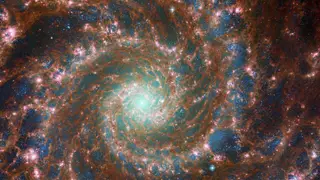
The cosmos hosts eerie celestial formations that resemble ghosts, skulls, and spiders, captured in stunning images from telescopes like Webb and Hubble. These structures form through stellar death processes, such as gas ejections creating brain-like nebulae or red-hued filaments mimicking spider legs. Though devoid of actual candy, these haunting visuals offer a thrilling treat for stargazers during Halloween.
On October 31, 2026, Scientific American published a Halloween-themed science feature highlighting eerie celestial formations captured by space telescopes such as the James Webb Space Telescope (JWST) and Hubble. The article spotlighted several named nebulae and galaxies—such as the Phantom Galaxy, Exposed Cranium Nebula, IC 63 Ghost Nebula, Red Spider Nebula, and Cat’s Head Nebula—each displaying shapes reminiscent of ghosts, skulls, spiders, and felines. These visual phenomena arise from natural astrophysical processes: dying stars expelling gas and dust, which then glow under ultraviolet radiation or reflect starlight. For instance, the Exposed Cranium Nebula’s brain-like structure results from sequential ejections of hydrogen (forming a white outer bubble) and heavier elements (creating an orange interior). The Red Spider Nebula’s filamentous “legs” are streams of hydrogen ejected by a central red-glowing star. These images were processed by teams including the PHANGS-JWST collaboration and STScI, with contributions from researchers like J. Lee and J.H. Kastner. The story was authored by Mary Randolph, a news intern whose work has appeared in outlets such as Smithsonian Magazine and Pew Research Center.
The article’s framing of cosmic imagery through Halloween motifs reflects a broader trend in science communication: using cultural narratives to engage public interest in astronomy. While no new scientific discoveries were reported, the piece leveraged existing data fro
This story may deepen public fascination with space during seasonal events like Halloween, potentially boosting interest in astronomy education and science media consumption. By linking cosmic imagery to familiar cultural symbols, it could encourage younger audiences to explore STEM fields, especially through visually driven platforms like social media or educational apps. The approach mirrors earlier efforts such as NASA’s “Pillars of Creation” campaign in the 1990s, which used dramatic visuals to popularize space science and sustain public support for missions. However, while such narratives can inspire, they may also risk conflating aesthetic interpretation with scientific accuracy—especially if audiences conflate artistic likenesses with literal biological or structural features. The long-term impact on scientific literacy remains uncertain. What could emerge is a growing demand for more accessible, visually rich science content, possibly influencing how institutions like Scientifi