Ancient DNA Reveals Extinct-Looking Bird Was Actually a Larger Form of Living Crane
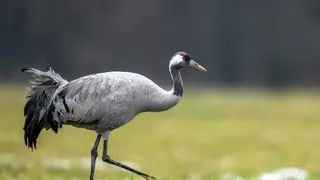
New genetic analysis shows that bones previously believed to belong to an extinct giant crane species were actually from the common crane, a species still alive today. The study overturns a 150-year-old classification based on size alone. Researchers suggest that sexual dimorphism may have misled earlier scientists into thinking it was a separate, vanished species.
In 2026, researchers led by Dr. John Stewart from Bournemouth University (BU) used ancient DNA analysis to resolve a long-standing paleontological mystery: bones previously classified as belonging to the extinct giant crane *Grus primigenia*, first described in 1871 by French biologist Alphonse Milne-Edwards, were actually from the common crane (*Grus grus*), a species still found across Europe today. The study analyzed genetic material from 18 fossilized crane bones recovered from sites in England, Wales, France, Germany, and the Balearic Islands, with results published in *Royal Society Open Science*. This overturns a 150-year-old assumption based solely on skeletal size and morphology, which had led scientists to believe that a distinct, larger species had vanished after the last Ice Age. The team, working with the Centre for Palaeogenetics in Stockholm, argues that sexual dimorphism—specifically, the presence of much larger males and smaller females within the same species—likely misled earlier researchers into thinking they were dealing with two separate species. The findings raise broader questions about how fossil-based classifications may have overestimated past extinctions, particularly when size variation alone is used as a taxonomic criterion.
The study’s implications extend beyond cranes. It suggests that other prehistoric bird species identified primarily by bone dimensions might also be misclassified, potentially reflecting size variation within living species
This discovery could reshape how scientists interpret fossil records, particularly in ornithology and paleontology, where morphology has long been the primary tool for species identification. If size variation due to sexual dimorphism or environmental adaptation is more common than previously thought, it may lead to a reevaluation of numerous extinct species claims, potentially reducing estimates of prehistoric biodiversity loss. This could influence conservation policy by challenging assumptions about how many species have truly vanished, possibly shifting focus toward habitat degradation as a key driver of morphological change rather than extinction. The case echoes earlier debates in mammalian paleontology—such as the reclassification of certain Pleistocene horse remains—as evidence that genetic tools can correct long-standing misconceptions rooted in physical traits alone. Moving forward, institutions like museums and research centers may prioritize ancient DNA analysis when revisi