Ancient DNA from Medieval Chinese Seeds Reveals Melons’ Asian Origins and Evolutionary Journey
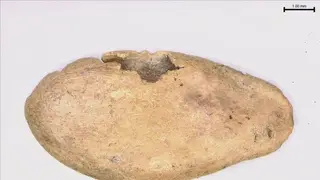
Genetic analysis of waterlogged melon seeds from a 10th-century Chinese port reveals that medieval melons had light-green flesh, yellow skin, and originated in South Asia. The findings challenge earlier assumptions that melons evolved in Africa and support multiple independent domestication events across Asia. These ancient fruits likely reflected both agricultural practices and artistic preferences of the Song dynasty.
In 2024, archaeologists excavating the Shuomen Gugang port in southeastern China uncovered waterlogged melon seeds dating to the Song dynasty (circa 960–1279), preserved in sediment that allowed for rare ancient DNA recovery. These seeds belonged to the East Asian agrestis melon lineage and revealed that medieval Chinese melons had light-green flesh and yellow skin—distinct from today’s sweet, orange-fleshed varieties. Genetic analysis traced their origins to South Asia, challenging long-held assumptions that melons evolved in Africa due to the presence of wild Cucumis species there. This shift in understanding builds on earlier work by WashU biologist Susanne Renner, who in 2010 analyzed over 100 Cucumis samples and concluded melons likely originated in Asia, based on biogeographic patterns. Subsequent research confirmed multiple domestication events—twice in India, once in Northeast Africa, and possibly in southeastern China. The discovery at Shuomen Gugang supports a southern trade route via the Tea Horse Road, rather than the northern Silk Road, as the most plausible path for melon introduction, given earlier finds in southern Chinese royal tombs predating northern ones by 800–1,000 years. The research team, led by Renner and WashU archaeologist Xinyi Liu, collaborated with scientists in Germany and the UK, combining genetics with archaeological context. While the cultural significance of melons—symbolizing fertility due to their seeds—is well known, this study highlights
This discovery could reshape public understanding of how food crops evolved beyond simple agricultural utility, showing that cultural values—like the Song dynasty’s reverence for jade-like green tones—may have co-evolved with plant traits. The findings may influence modern breeding programs by highlighting historical diversity in melon genetics that could be leveraged for climate resilience or novel flavors. Institutions focused on heritage and food history may use this case to promote interdisciplinary research, bridging archaeology, genetics, and art history. A comparable precedent is the study of ancient maize in Mesoamerica, where genetic data revealed domestication patterns that aligned with pre-Columbian iconography, suggesting similar cultural-genetic feedback loops. Here, the melon’s role in ceramics may reflect a broader pattern where aesthetic ideals shaped agricultural choices, or vice versa. What remains uncertain is whether the green color preference was driven by the frui