Teen’s beachcombing yields rare 4,500-year-old stone spear tip in Virginia
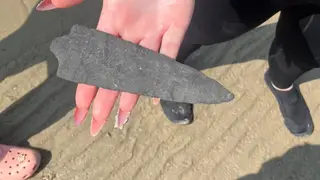
A student searching for fossilized shark teeth on a Virginia barrier island discovered a remarkably preserved stone spear point dating to between 3,000 and 4,500 years ago. The artifact, classified as a Lehigh/Koens-Crispin type, measures about six inches long and is considered exceptionally well-preserved by archaeologists. Its find offers new insight into early human tool use and settlement patterns along the Eastern Shore.
A 16-year-old student conducting a beachcombing expedition on a Virginia barrier island made an unexpected discovery while searching for fossilized shark teeth— a stone spear tip estimated to be between 3,000 and 4,500 years old. The artifact, measuring approximately six inches in length, has been classified as a Lehigh/Koens-Crispin type, a rare form of prehistoric tool associated with early human activity in the region. Its exceptional state of preservation has drawn attention from archaeologists, who note that such finds are uncommon due to environmental degradation over millennia. The discovery site lies along the Eastern Shore, an area known for its rich archaeological potential but limited surface evidence of early settlement.
The significance of this find lies in what it reveals about early human tool use and migration patterns in the mid-Atlantic coastal zone. While previous findings have suggested intermittent habitation during the late Archaic period, this spear point may indicate more sustained or specialized activity than previously documented. The Lehigh/Koens-Crispin type is not widely reported in Virginia, making this artifact a rare addition to the regional archaeological record. No further details about the student’s identity, the exact location on the barrier island, or the process of reporting the find are available. It remains unknown whether the spear tip was used for hunting, defense, or ceremonial purposes, nor is there information on how it came to be
This discovery could deepen public interest in archaeology among younger generations, particularly through stories of amateur finds contributing to scientific knowledge. It may inspire similar beachcombing or citizen science efforts along coastal regions, potentially leading to more unanticipated discoveries. The case echoes the 2017 find of a 13,000-year-old Clovis point in Texas by a high school student, which similarly highlighted the role of non-professionals in uncovering ancient history. Such stories may influence educational curricula and museum outreach programs to emphasize hands-on learning and local heritage. Institutions like state historical societies or university archaeology departments may see increased public engagement, though the long-term impact on funding or policy remains uncertain. The broader effect could be a shift toward more inclusive models of archaeological research that value community contributions. However, it also raises concerns about artifact looting