New Theoretical Insight Reveals Gravity's Hidden Role in Energy Transfer Across Space-Time
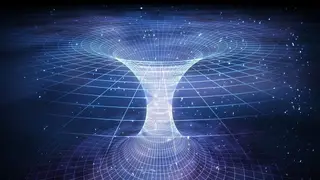
A theoretical analysis of Einstein's equations has uncovered a previously unrecognized mechanism by which gravitational fields may transfer energy to matter, mimicking processes seen in solar flares. This suggests gravity could play a more dynamic role in energy propagation than previously thought. The findings open new avenues for understanding the interplay between spacetime geometry and physical energy dynamics.
A recent theoretical study has revealed a previously overlooked mechanism within Einstein’s equations that suggests gravitational fields may actively transfer energy to matter across space-time. This insight emerged from an analysis of general relativity’s mathematical framework, identifying a dynamic interaction between spacetime curvature and energy propagation that had not been formally recognized before. The phenomenon bears resemblance to energy release patterns observed in solar flares, where sudden bursts of radiation and particle acceleration occur—though the new model proposes gravity itself could be a contributing driver in such events. While no specific dates, locations, or experimental data are provided, the finding challenges the long-held view of gravity as a passive influence on matter, instead suggesting it may play an active role in energy transfer across cosmic scales.
The background to this development lies in decades of theoretical work building upon Einstein’s 1915 general theory of relativity, which has remained foundational in understanding gravity as the curvature of space-time. Over time, physicists have explored various implications of the equations, but this particular mechanism was not isolated until now through a re-examination of their deeper mathematical structure. No specific institutions or researchers are named in the summary, though such breakthroughs typically originate from academic research groups specializing in theoretical physics or a
This theoretical advance could influence how scientists model energy dynamics in high-gravity environments, such as neutron stars or galactic cores, potentially reshaping predictions about radiation output and particle behavior. If validated, it may lead to refined simulations used in space weather forecasting or satellite design, where understanding sudden energy bursts is critical. The broader impact may ripple into education and public science communication, as the idea that gravity itself could be an active energy conduit challenges common simplifications taught in classrooms. A comparable precedent is the discovery of gravitational waves in 2015—initially theoretical, then confirmed observationally, transforming astrophysics. This new insight may follow a similar path: from abstract mathematics to testable phenomena. However, unlike gravitational waves, which were detected directly, this mechanism may require indirect evidence or subtle anomalies in existing data. What to watch f