New Study Explains Diverse Mineral Composition in Asteroid Ryugu Sample
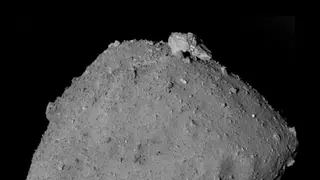
Scientists have resolved a long-standing puzzle in asteroid sample analysis by showing that variations in clay-like minerals within Ryugu’s matrix stem from localized aqueous alteration rather than widespread environmental differences. This suggests water activity was not uniform across the parent body, but occurred in isolated pockets. The findings deepen our understanding of early Solar System processes and planetary formation.
In November 2026, researchers led by Reon Okumura of Kanazawa University published findings in *Nature Communications Earth and Environment* that resolve a long-standing mystery in asteroid sample analysis from Ryugu, a C-type asteroid visited by Japan’s Hayabusa 2 mission. The spacecraft collected samples in 2018 and returned them to Earth in 2020, marking the first successful return of material from a carbonaceous chondrite asteroid. Scientists have since analyzed the fine-grained matrix of the sample, which contains magnesium-rich hydrous silicates formed through aqueous alteration—water-rock interactions that occurred in the early Solar System. The central puzzle was the presence of two distinct mineral phases, serpentine- and saponite-like phyllosilicates, seemingly altered under different conditions within the same matrix, suggesting patchy or localized processes rather than uniform change. Using synchrotron radiation at Japan’s SPring-8 facility and the Photon Factory High Energy Accelerator, researchers identified poorly crystalline magnesium silicate hydrate (M-S-H) as a dominant component. This material can form under similar aqueous conditions yet exhibit varying magnesium-to-silicon ratios, explaining mineral diversity without requiring disparate alteration environments. The discovery suggests that water activity on Ryugu’s parent body was not widespread but occurred in isolated pockets, with M-S-H acting as an initial, flexible phase that later evolved into more
The discovery could influence planetary science education and public engagement, reinforcing the value of sample-return missions in uncovering hidden details about Solar System origins. Institutions like JAXA, NASA, and ESA may see renewed interest in funding such missions, especially as they demonstrate tangible scientific returns years after launch. The findings also have implications for astrobiology: if water-rock interactions occurred in isolated pockets on asteroids, it suggests that prebiotic chemistry might have begun earlier and more locally than previously thought. This could shift how researchers model the delivery of organic molecules to early Earth via meteorites. A comparable precedent is the 2013 revelation from the Murchison meteorite, which revealed complex organic compounds and reshaped understanding of extraterrestrial chemistry. While not a sample-return mission, it similarly demonstrated that meteorites preserve ancient processes. The Ryugu study may inspire simila