Morning Sky Delights: Venus, Moon, and Spica Form Rare Celestial Trio
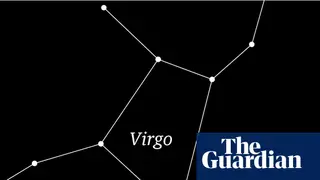
Early morning skywatchers can witness a rare alignment of Venus, the waning crescent moon, and the bright star Spica in the eastern sky. The event, visible around 6 AM GMT on November 7, offers a striking visual spectacle with Venus as the brightest object. Earthshine may also illuminate the moon's dark side, adding to the celestial beauty.
On the morning of 7 November 2026 at approximately 6:00 AM GMT, skywatchers in London and across the globe were treated to a rare celestial alignment featuring Venus, the waning crescent moon, and the bright star Spica. Visible in the east-south-east horizon, Venus—already known as the brightest object in the morning sky—appeared just above Spica, the most luminous star in the constellation Virgo, located roughly 250 light years from Earth. The moon, only 4% illuminated and two days shy of new moon, formed a delicate crescent near the planet, with earthshine faintly illuminating its dark side. This configuration was visible not only from northern latitudes like London but also from the southern hemisphere, where the trio appeared higher in the sky before sunrise. The event occurred during a period of low ambient light, ideal for observing such subtle astronomical phenomena.
The alignment is a result of the orbital mechanics of Venus and the Moon, which periodically create close conjunctions with bright stars like Spica due to their relative positions in the solar system. While such events are not unprecedented, this particular trio—Venus, moon, and Spica—forms a rare visual grouping that has drawn attention from amateur astronomers and science communicators alike. The story was reported by Stuart Clark of the Guardian’s Starwatch section, highlighting public engagement with astronomy through accessible, timely observations. No formal space agencies or research institutions a
This rare morning sky spectacle could deepen public engagement with astronomy, particularly among casual observers who may not follow space science regularly. The event’s accessibility—requiring no special equipment and occurring at a predictable time—may encourage more people to look up, fostering curiosity about planetary motion and celestial mechanics. Such moments often serve as entry points into broader scientific literacy, potentially influencing educational outreach efforts by institutions like the Royal Astronomical Society or amateur astronomy clubs. A comparable precedent is the 2015 "Great Conjunction" of Jupiter and Saturn, which sparked widespread media coverage and public interest in stargazing. The current event may similarly act as a catalyst for increased participation in citizen science projects or telescope-sharing initiatives. However, its long-term impact on funding or policy remains uncertain. What to watch for next is whether this moment becomes a benchmark for f