Guided Viewing: When and Where to Catch the 2026 Leonid Meteor Shower Across the U.S.
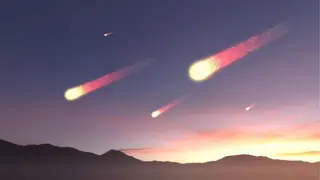
The Leonid meteor shower, active from November 6 to 30, will peak on the nights of November 17 and 18. Skywatchers are advised to observe during early morning hours after moonset for optimal visibility. The radiant point, located in the constellation Leo, rises and sets at different times across major U.S. cities, with best viewing conditions in dark, low-light-pollution areas.
The Leonid meteor shower, active from November 6 to 30, 2026, is expected to peak on the nights of November 17 and 18, offering skywatchers across the United States a chance to observe up to 15 meteors per hour under ideal conditions. The radiant point, located in the constellation Leo, rises and sets at different times depending on location, with New York seeing it rise at 22:54 EST on November 17 and set at 13:39 EST on the 18th, while Los Angeles records a rise at 23:09 PST and a set at 13:18 PST. These timings are based on data from Time and Date, with NASA emphasizing that optimal viewing occurs in the early morning hours after moonset, when sky darkness is maximized. The meteors result from Earth passing through debris left by Comet 55P/Tempel-Tuttle, which orbits the Sun every 33 years—explaining why intense meteor storms occur periodically. While no major storm is predicted for 2026, the annual event remains a highlight of the November skywatching calendar. The story draws on prior reporting about the Northern Taurids and the Beaver Supermoon, indicating that 2026 is shaping up as a significant year for meteor activity.
Organizations like NASA and websites such as Time and Date provide critical data to help the public plan observations. Individual skywatchers, amateur astronomers, and science communicators aim to maximize visibility by choosing dark, low-light-pollution areas and allowing their eyes 15–20 minutes to adapt to darkness. The broader context includes a
The 2026 Leonid meteor shower could inspire renewed public interest in astronomy, particularly among younger audiences and urban residents seeking respite from digital overload through stargazing. This event may boost engagement with science education initiatives, local planetariums, and outdoor recreation groups promoting dark-sky preservation. Similar to the widespread enthusiasm generated by the 2017 total solar eclipse—when millions participated in viewing events—the Leonids could catalyze community-based astronomy gatherings, potentially increasing demand for accessible viewing locations and educational content. Institutions like NASA and science media outlets may see increased traffic and social media engagement during the peak dates, reinforcing their role as public science gatekeepers. While no direct economic impact is noted, related sectors such as outdoor gear retailers, telescope manufacturers, and travel services near dark-sky parks could experience modest upticks in in