Venus Reaches Peak Brightness in November, Offering a Stunning Pre-Dawn Display
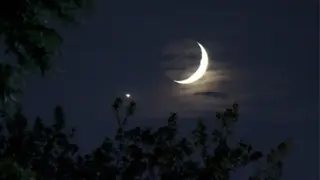
Venus will shine at its brightest on November 27, reaching an apparent magnitude of −4.87 and outshining even Sirius, the brightest star in the night sky. The planet’s peak brightness occurs just after its inferior conjunction on October 24, when it appears as a waxing crescent. Best viewing times across the U.S. are during early morning hours, with specific rise and set times provided for major cities.
Venus reached its peak brightness on November 27, shining at an apparent magnitude of −4.87, making it the most luminous object in the pre-dawn sky after the Sun. This surpassed even Sirius, the brightest star in the night sky, by a factor of 20. The event occurred following Venus’s inferior conjunction on October 24, when the planet passed between Earth and the Sun, transitioning from a waning crescent to a waxing crescent phase visible in November. Observers across the U.S. could view the planet during early morning hours, with rise times ranging from 03:28 in Los Angeles and Boston to 03:59 in Seattle, and set times extending into midday. The phenomenon was particularly favorable for Northern Hemisphere viewers, as Venus rose well before sunrise, while Southern Hemisphere observers saw it only after morning twilight began. The planet’s brightness is due to its proximity to Earth and the high reflectivity of its cloud cover, which maximizes sunlight reflection when viewed from our perspective during this phase.
This peak brightness follows a predictable cycle tied to Venus’s orbital mechanics—specifically, its inferior conjunctions, which occur roughly every 584 days. The last time Venus was similarly bright in the evening sky was on September 22, when it reached −4.78 magnitude, but that visibility was best for Southern Hemisphere viewers due to its position at sunset. NASA and Time and Date provided observational data, while amateur astronomers and skywatching communitie
The visibility of Venus at its peak brightness could strengthen public engagement with astronomy, particularly among amateur stargazers and educators using celestial events to promote STEM learning. This kind of natural spectacle may encourage more people to invest in binoculars, telescopes, or astronomy apps, potentially boosting sales in consumer optics and educational platforms. Comparable to the 2012 Venus transit, which drew global attention and media coverage, this event could serve as a catalyst for renewed interest in planetary science and space exploration funding. Institutions like NASA may benefit indirectly through increased public support for missions such as VERITAS or DAVINCI+, which aim to study Venus’s atmosphere and geology. However, the long-term impact depends on whether media and educational organizations sustain momentum beyond the event. What could follow is a broader cultural shift toward valuing observational science, especially in urban areas where light pollu