Four Volunteers Complete Year-Long Mars Simulation Mission at NASA’s Johnson Space Center
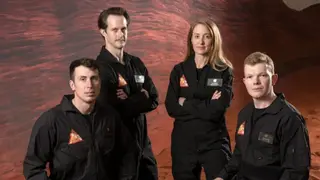
The CHAPEA 2 mission concluded after 378 days inside a simulated Mars habitat at NASA’s Johnson Space Center, where four volunteers replicated life on the Red Planet. They conducted simulated spacewalks, managed habitat systems, grew crops, and dealt with delayed communications to study human performance in isolated environments. The crew emerged on October 31, 2026, marking a significant step toward future crewed missions to Mars.
On October 31, 2026, four volunteers—Ross Elder (mission commander), Ellen Ellis (medical officer), Matthew Montgomery (science officer), and James Spicer (flight engineer)—completed a 378-day simulation of life on Mars inside a 1,700-square-foot habitat at NASA’s Johnson Space Center in Houston. The Crew Health and Performance Exploration Analog (CHAPEA) Mission 2, which began on October 19, 2025, replicated the challenges of deep space travel, including simulated extravehicular activities, crop cultivation using hydroponics, habitat maintenance, and communication delays up to 22 minutes—mirroring real-time conditions between Earth and Mars. The crew lived in isolation, managing limited resources and making autonomous decisions without immediate support from mission control. Their work included testing the “ambulance in a box” medical device developed at NASA Glenn Research Center, designed to help astronauts handle emergencies independently. This mission followed CHAPEA 1, completed in July 2024, continuing NASA’s effort to prepare for crewed Mars missions by 2030s. The agency is already planning its next analog mission—Moon and Mars Exploration Analog—set to launch no earlier than August 2027, merging CHAPEA with the HERA program to test integrated systems for long-duration spaceflight.
The broader context includes NASA’s Artemis program, aiming to return humans to the Moon by 2026 (Artemis IV) and establish a sustainable lunar presence. This effort is part of a larger st
The CHAPEA 2 mission could influence public perception of space exploration as increasingly feasible, reinforcing the idea that human life beyond Earth is a near-term possibility. By showcasing real people enduring year-long isolation with resilience and humor—Ellis’s remark about “laughing more than I expected”—the mission humanizes the challenges of deep space travel, potentially boosting public support for NASA’s long-term goals. The emphasis on medical innovation, like the “ambulance in a box,” may also stimulate private-sector interest in autonomous healthcare systems for remote or extreme environments, with applications beyond space, such as rural medicine or disaster response. Comparable to the Apollo program’s role in galvanizing national pride and technological advancement in the 1960s, CHAPEA may serve as a modern analog for building societal investment in space infrastructure. However, the long-term impact remains uncertain: whether these simulations will translate into succ