Reconstructing the Universe’s Longest Night: The Cosmic Dark Ages After the Big Bang
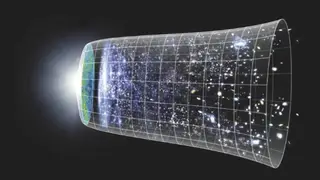
Following the release of the cosmic microwave background radiation about 380,000 years after the Big Bang, the universe entered a period known as the cosmic dark ages, lasting until roughly 200 million years post-Big Bang. During this time, neutral hydrogen absorbed light, rendering the cosmos opaque and effectively dark to visible wavelengths. Astronomer Oliver Zier explains that this era ended when the first stars formed, ionizing the hydrogen and allowing light to travel freely once more.
The cosmic dark ages spanned from approximately 380,000 years after the Big Bang until around 200 million years post-Big Bang, a period when neutral hydrogen absorbed light and rendered the universe opaque to visible wavelengths. This era followed the release of the cosmic microwave background (CMB), the first detectable light from the early cosmos, which became invisible as space expanded and cooled. During this time, no stars or galaxies had yet formed, leaving the universe in a state of pervasive darkness. The transition out of this period was triggered by the formation of the first stars—massive, short-lived objects that emitted intense ultraviolet radiation. This radiation ionized the surrounding hydrogen, ending the dark ages and initiating the epoch of reionization. According to Oliver Zier, an astronomer at the Center for Astrophysics | Harvard & Smithsonian and lead author of the LUMINA project, this process was not instantaneous but a gradual emergence of light across the cosmos. The seeds for these stars were laid earlier, during the formation of neutral atoms and the gravitational clustering of dark matter, which pulled in gas that cooled through molecular hydrogen, enabling collapse into dense stellar nurseries. The LUMINA simulation project aims to model this complex evolution with unprecedented detail, testing theoretical predictions against observational data from upcoming telescopes like the James Webb Space Telescope.
The broader significance lies in how th
The story of the cosmic dark ages and the dawn of the first stars resonates beyond astrophysics, influencing public understanding of humanity’s place in the cosmos and inspiring interest in space science education and technology. As missions like the James Webb Space Telescope begin to probe earlier epochs, discoveries from projects like LUMINA could reshape how we teach cosmology in schools and universities, emphasizing dynamic processes over static models. The societal impact may also extend to private sector innovation, as demand grows for advanced computational tools and data analysis techniques used in large-scale simulations. Comparable to the public fascination sparked by the Hubble Deep Field images in the 1990s—where distant galaxies revealed a universe teeming with life—this new frontier could fuel renewed investment in space-based observatories and AI-driven astronomy platforms. While no immediate market shifts are expected, institutions like NASA and ESA may see increased f