November’s Beaver Moon to Become First of Three Consecutive Supermoons
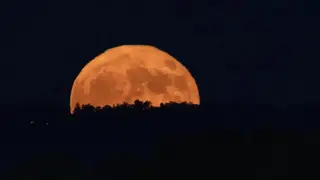
The Beaver Moon on November 24, 2026, will be the first in a trio of consecutive Supermoons visible in November, December, and January. It will appear at its closest approach to Earth—359,486 km—on November 25, slightly after reaching full phase. Skywatchers are advised to view it near moonrise for optimal visibility, with peak times varying by location and best seen under clear skies.
The Beaver Moon of November 24, 2026, will mark the first in a rare sequence of three consecutive Supermoons, with the next occurring in December and January 2027. The Moon reaches its closest approach to Earth—359,486 kilometers—on November 25, slightly after achieving full phase on the 24th. This proximity makes it appear larger and brighter than a typical Full Moon, though not as dramatically so as some past events like the 2016 Supermoon. The event is named the Beaver Moon due to traditional almanac practices linking November’s lunar cycle to beavers preparing for winter, a naming convention rooted in Native American and colonial-era folklore. Skywatchers across the globe are advised to observe it near moonrise for optimal visual impact, with peak visibility varying by location—New York’s moonrise at 4:15 p.m., Sydney’s at 7:34 p.m., and London’s full Moon peak at 2:53 p.m. on November 24. The article cites NASA and The Old Farmer’s Almanac as authoritative sources, reinforcing the cultural and scientific credibility of lunar naming and timing data.
The phenomenon is driven by the Moon’s elliptical orbit, where perigee (closest point) aligns with full phase. While not a new astronomical occurrence, the clustering of three Supermoons in consecutive months is relatively uncommon and generates public interest in amateur astronomy. Organizations like NASA and media outlets such as Getty Images and The Old Farmer’s Almanac contribute to public awareness through educational co
The Beaver Moon 2026 could inspire renewed public engagement with astronomy, particularly among younger demographics and amateur observers using everyday devices like smartphones. This may strengthen informal science education networks, such as local stargazing clubs or social media astronomy communities, potentially increasing demand for accessible telescopes and related apps. The event may also boost tourism in areas with clear night skies—like Arizona’s Dragoon Mountains or the Australian outback—where guided viewing events could emerge. A comparable precedent is the 2016 Supermoon, which saw widespread media coverage and a surge in public interest that temporarily elevated astronomy-related merchandise sales. While not directly tied to space policy, such events may indirectly support advocacy for better public access to dark-sky preserves or funding for planetary science outreach. What’s next could be sustained interest in lunar observation, especially if follow-up meteor showers o